AI agent development
Agents that read a request, use approved tools, look up what they need and finish defined tasks, with checks at the points that matter.
We design, build and integrate AI around your data, tools and team, from first prototype to production.
You do not need a complicated AI strategy to begin. Start with the task, decision or customer experience you want to improve.
Agents that read a request, use approved tools, look up what they need and finish defined tasks, with checks at the points that matter.
Features that write, summarise, search and classify your business information, built into the product your team or customers already use.
Assistants that answer customers and staff from your approved content and systems, and hand over to a person when a question needs one.
Language models connected to your documents and knowledge bases, so answers draw on your own information instead of general model knowledge alone.
Less repetitive work, by connecting AI to the applications, approval steps and processes your business already runs on.
AI capabilities inside the software you already have, from internal dashboards and customer portals to larger business applications.
Models that learn from your historical data to forecast demand, flag risk early and anticipate what customers need next, with the signals behind each prediction visible to your team.
The best AI project is rarely the biggest one. It is the one that removes a real bottleneck or makes an important experience better.
Have a different use case? Tell us what you want to improve and we will help you judge whether AI is a good fit.
Help people find answers, route requests to the right team and summarise long conversations for your agents.
Pull information out of documents, prepare summaries, organise incoming requests and support repeatable processes.
Research accounts, organise enquiries, personalise content and get to the relevant information faster.
Add intelligent search, recommendations, conversational interfaces or AI-assisted features to a new or existing product.
A useful AI solution needs more than a model. It needs the right data, clear boundaries, a place in your workflow and a way to check how it performs.
We map the task, the people involved, the current process, the data available and what a good result looks like.
We decide whether the job needs a language model, RAG, an agent, conventional automation or a mix of them.
We build a focused first version, connect the systems it needs and test it against realistic scenarios before widening its scope.
We put it into your workflow, watch how it behaves and use feedback and evaluation results to guide the next round of changes.
Your AI solution should work with the systems and information your team already relies on. We plan integrations around your use case, access requirements and technical environment.
The right tools depend on the job, so we choose the architecture after understanding your requirements rather than forcing every project into the same stack.
AI can make mistakes, especially when information is incomplete or a task has several possible outcomes. We design around that with sensible checks, clear permissions and human review where the consequences call for it.
Where the use case needs it, we connect AI to approved documents or data and test whether its answers are supported by those sources.
We define which actions the system can take on its own, which need approval and when a task should be handed to a person.
We evaluate realistic inputs, edge cases, failure handling and output quality, before release and after it.
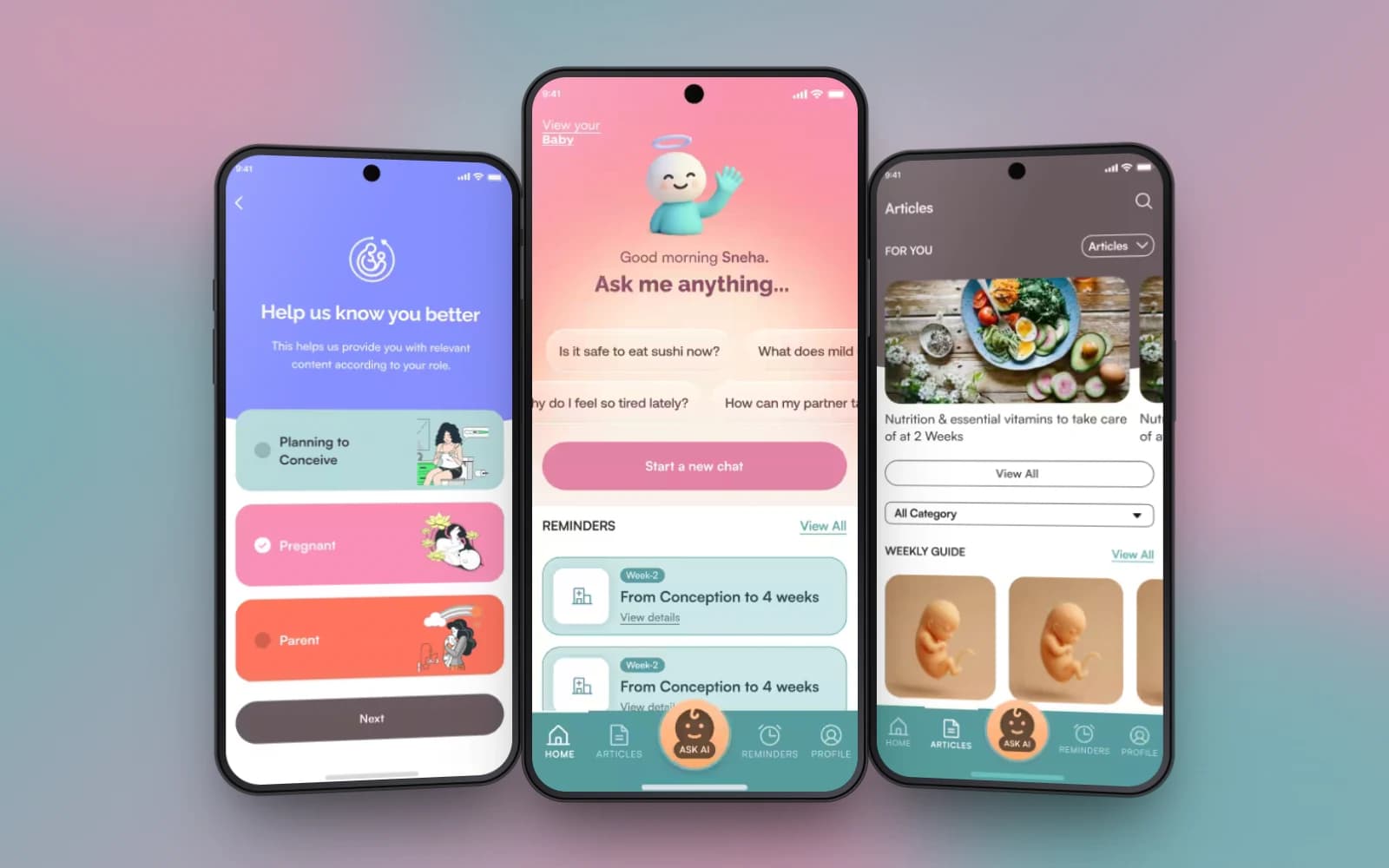
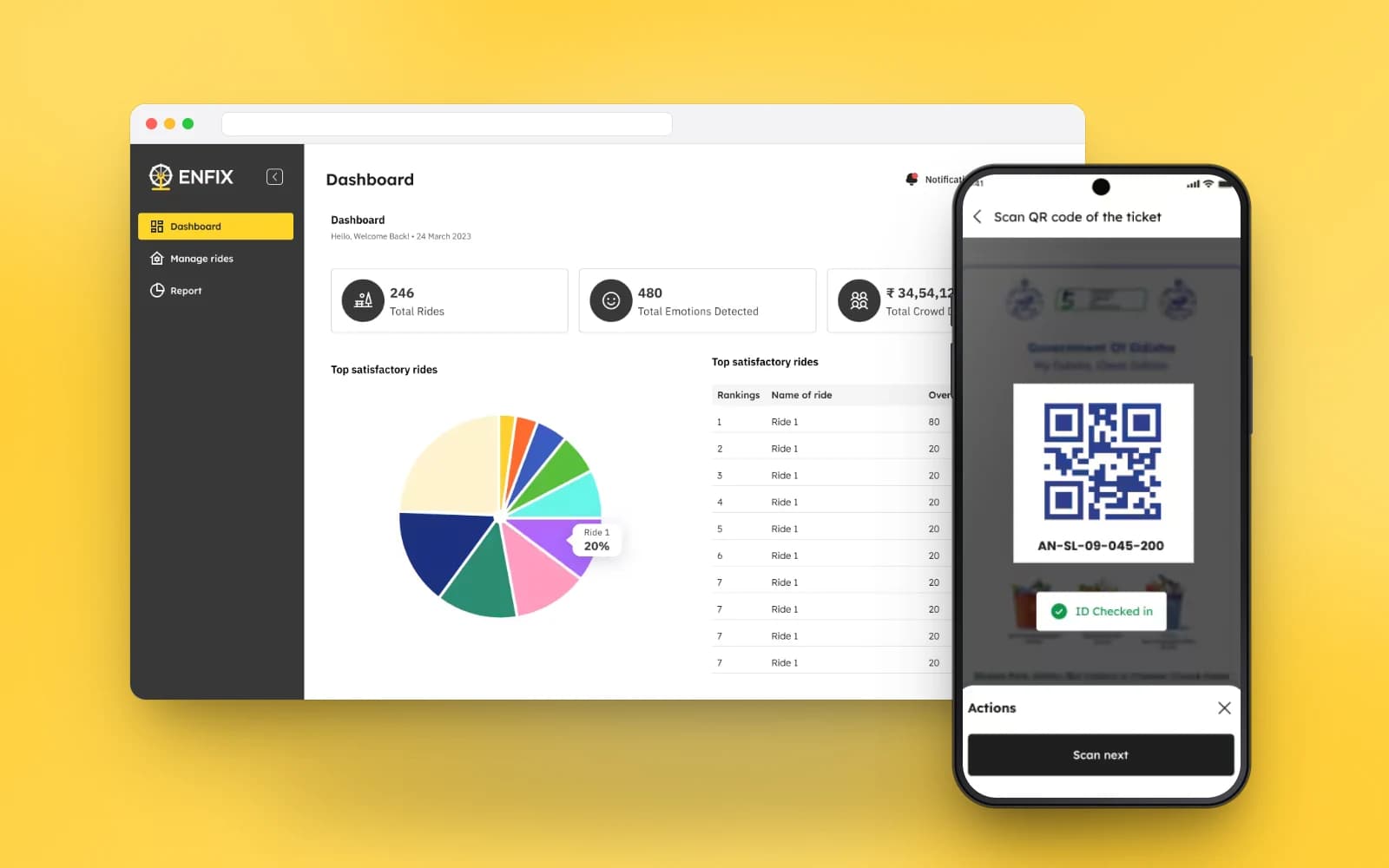
What AI changes is easiest to see in a real product. Here are three we designed and built.
Have a question that is not here? .
An AI development company helps businesses plan, build, integrate and maintain software that uses AI. Depending on the need, that can include AI agents, chatbots, document search, generative AI features and workflow automation.
We build custom AI applications such as AI agents, chatbots, generative AI features, RAG-based knowledge tools, predictive models, workflow automation and AI integrations. The right solution depends on the task, your data, your existing systems and the outcome you need.
Start with a task that is repetitive, information-heavy, slow or hard to scale. We can help assess the current process, the data available, the risks and whether AI is the right fit. Sometimes conventional software or automation is the better choice, and we will say so.
Often, yes. It depends on the APIs, permissions, data formats and security requirements of your current systems, which we assess before settling on how to build it.
It depends on scope, data readiness, integrations and testing. A focused proof of concept can take far less time than a production system connected to several business tools. We set milestones once we understand the requirements.
Cost depends on what the solution needs to do, the systems it connects to, the model and infrastructure choices, and the level of testing and ongoing support. We give a scoped estimate after an initial conversation.
Yes, as long as the documents can be accessed and processed appropriately. A retrieval-based approach lets an AI system find relevant passages from approved sources. The quality of the result depends on the documents, access controls, retrieval design and evaluation.
It depends on the risk of the use case. Controls can include permission limits, grounding answers in sources, evaluation, logging, human approval and fallback paths. No AI system should be described as error-proof, and we design with that in mind.
Tell us what takes too much time, creates friction or could simply work better. We will talk through the problem, find a sensible starting point and outline what it would take to build.
No need for a full technical brief. Start with the problem you want to solve.