Coming up with a mobile app idea isn't particularly difficult. Finding one that solves a problem people genuinely care about, can be monetised, and doesn't require millions in funding to get off the ground is the real challenge.
As we move into 2027, startup opportunities are increasingly shifting towards specialised apps. Instead of trying to build the next social network or another generic AI assistant, founders can focus on everyday problems faced by specific groups of people, from freelancers and small business owners to parents, students and local service providers.
The following 15 mobile app ideas for startups are worth exploring in 2027. Each comes with a potential audience, the problem it solves, a practical starting point and a possible revenue model.
15 mobile app ideas for startups in 2027
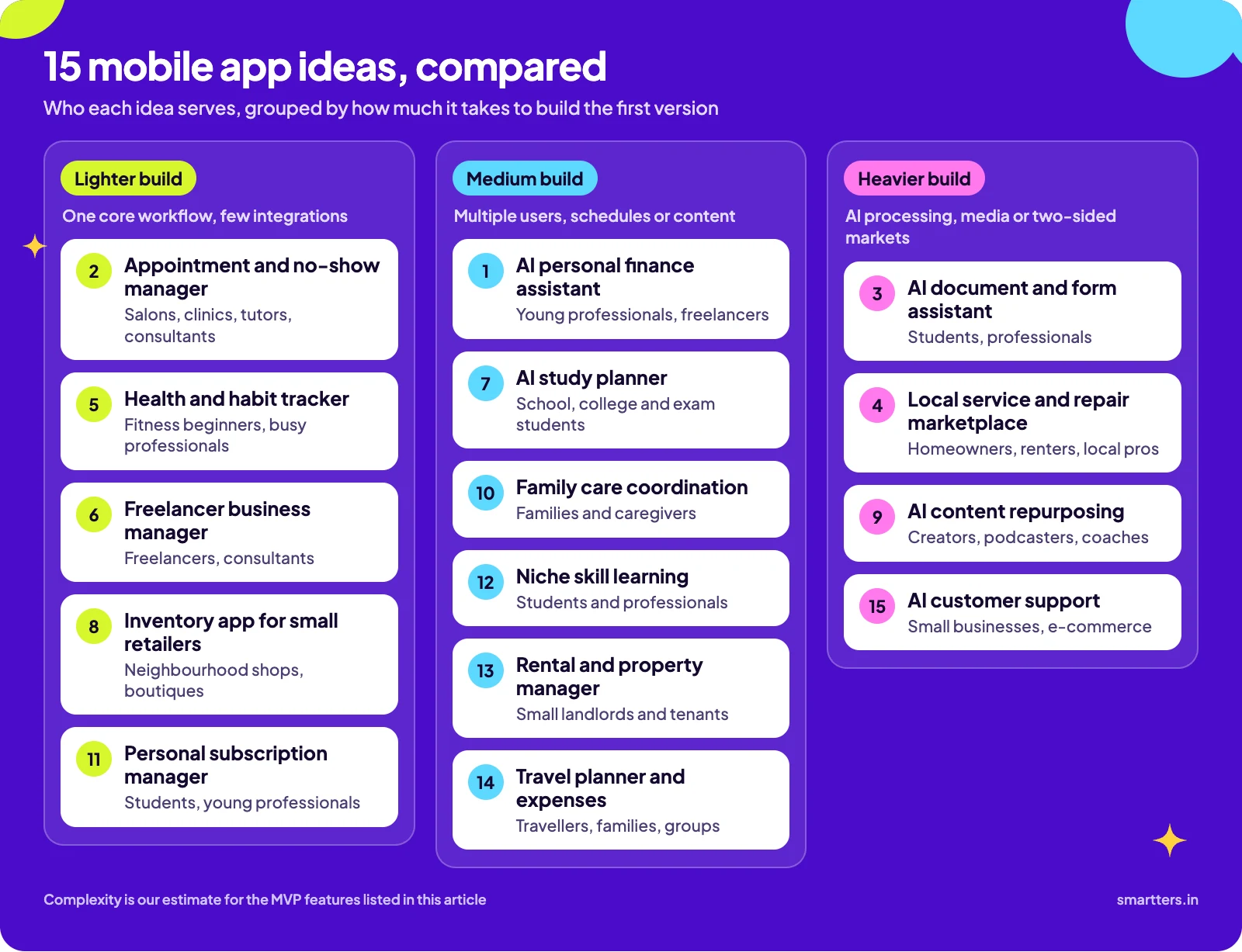
Here's how the ideas compare at a glance: who each one is for, and how much it takes to build a first version.
1. AI Personal Finance Assistant
Managing money isn't difficult because people don't understand numbers. It's difficult because expenses are scattered across bank accounts, subscriptions, bills, investments and everyday purchases.
An AI-powered personal finance app could bring these things together and help users understand where their money is going, identify spending patterns and plan upcoming expenses without requiring them to manually maintain complicated spreadsheets.
Target audience: Young professionals, freelancers and people managing multiple financial commitments.
Core features for an MVP:
- Expense tracking and categorisation
- Monthly budget planning
- Bill and subscription reminders
- Spending insights and financial summaries
- Goal-based savings tracking
Monetisation: Freemium subscriptions, premium financial insights and paid planning features.
2. Smart Appointment and No-Show Management App
For salons, clinics, independent consultants, tutors and other service businesses, missed appointments can directly affect revenue.
A mobile app that helps businesses manage bookings, automate reminders, collect deposits and handle cancellations could make appointment management much easier, particularly for businesses that currently rely on WhatsApp and phone calls.
Target audience: Small service businesses, beauty salons, clinics, tutors and consultants.
Core features for an MVP:
- Online appointment booking
- Automated appointment reminders
- Cancellation and rescheduling
- Booking deposits
- Customer booking history
Monetisation: Monthly subscription, transaction fees or tiered business plans.
3. AI Document and Form Assistant
People regularly deal with documents they don't fully understand, whether it's a rental agreement, insurance document, application form or lengthy policy.
A document assistant could help users understand documents in plain language, extract important information, highlight deadlines and guide them through filling out forms. The focus should be on making complex paperwork easier, rather than presenting another generic chatbot.
Target audience: Students, working professionals, freelancers and individuals dealing with everyday paperwork.
Core features for an MVP:
- PDF and document uploads
- Plain-language explanations
- Key information extraction
- Deadline and clause highlighting
- Guided form completion
Monetisation: Freemium usage, document credits or monthly subscriptions.
4. Local Service and Repair Marketplace
Finding a reliable electrician, plumber, mechanic, appliance technician or other service professional often involves asking friends, searching through random listings or relying on local contacts.
A local service marketplace could connect customers with verified professionals, allowing them to compare availability, prices, reviews and service history before booking.
Rather than launching everywhere, a startup could begin with a single city or even a few neighbourhoods.
Target audience: Homeowners, renters and local service professionals.
Core features for an MVP:
- Service provider profiles
- Location-based discovery
- Booking and scheduling
- Reviews and ratings
- Price estimates and job tracking
Monetisation: Booking commissions, provider subscriptions or paid listings.
5. Personal Health and Habit Tracking App
Most habit tracking apps are good at reminding users to do something. Fewer help users understand why they struggle to maintain a routine.
A habit and health tracking app could connect daily activities such as sleep, exercise, hydration and personal routines to show patterns over time. Instead of overwhelming users with dashboards, it could focus on a handful of habits they actually want to maintain.
Target audience: Fitness beginners, busy professionals and people trying to build healthier routines.
Core features for an MVP:
- Custom habit tracking
- Daily and weekly progress
- Routine planning
- Streaks and reminders
- Personal progress insights
Monetisation: Premium subscriptions, advanced analytics and personalised routines.
6. Freelancer Business Management App
Freelancers often use several different tools to manage their business. Projects live in one place, invoices in another, expenses in spreadsheets and client conversations in messaging apps.
A freelancer-focused app could bring the essentials together without becoming an overwhelming project management platform.
Target audience: Freelancers, consultants, independent designers, writers and developers.
Core features for an MVP:
- Client management
- Project tracking
- Invoice creation
- Expense tracking
- Payment reminders
- Project profitability overview
Monetisation: Freemium plans, premium subscriptions and additional business features.
7. AI Study Planner for Students
Students often struggle with managing multiple assignments, examinations, revision schedules and deadlines. A study planner could turn a syllabus or list of assignments into a practical daily study plan.
The app could adjust the schedule when a student misses a session, rather than treating the original timetable as fixed.
Target audience: School students, college students and competitive examination candidates.
Core features for an MVP:
- Subject and syllabus management
- Assignment and exam deadlines
- Study schedule generation
- Revision reminders
- Progress tracking
Monetisation: Student subscriptions, premium study planning and institutional partnerships.
8. Smart Inventory App for Small Retailers
Many small retailers still manage stock manually or depend on basic billing software that doesn't offer useful inventory insights.
An inventory app built for small shops could help owners track stock, identify fast-moving products, record supplier purchases and receive alerts when items need restocking.
The opportunity lies in making inventory management simple enough for businesses that don't want a complicated enterprise system.
Target audience: Small retailers, neighbourhood shops, boutique stores and independent sellers.
Core features for an MVP:
- Product and stock management
- Barcode scanning
- Purchase and sales tracking
- Low-stock alerts
- Basic inventory reports
Monetisation: Monthly subscriptions, premium reports and multi-store plans.
9. AI Content Repurposing App for Creators
Creators frequently spend more time repurposing content than creating it. A long video, podcast or interview could potentially be turned into multiple short clips, captions, summaries and social media posts.
A mobile-first content repurposing app could help creators move from a single recording to a collection of ready-to-edit content.
Target audience: Influencers, podcasters, coaches, independent creators and small marketing teams.
Core features for an MVP:
- Video and audio uploads
- Automatic transcription
- Short clip suggestions
- Caption generation
- Content format conversion
Monetisation: Monthly subscriptions, processing credits or creator-specific plans.
10. Family Care Coordination App
Managing care for children, elderly parents or family members with ongoing needs can involve multiple people, appointments, medicines, responsibilities and schedules.
A family care app could help everyone involved stay informed without depending on long messaging threads or repeated phone calls.
Target audience: Families, caregivers and households coordinating care responsibilities.
Core features for an MVP:
- Shared family calendar
- Appointment reminders
- Task assignments
- Medication reminders
- Shared notes and updates
Monetisation: Family subscriptions, premium storage and advanced coordination features.
11. Personal Subscription Manager
Streaming services, cloud storage, software, memberships and recurring payments can quickly become difficult to keep track of.
A subscription manager could help users see all their recurring expenses in one place, understand upcoming charges and identify subscriptions they no longer use.
Target audience: Students, young professionals, families and digital subscription users.
Core features for an MVP:
- Subscription tracking
- Renewal reminders
- Monthly recurring expense overview
- Spending categorisation
- Subscription history
Monetisation: Premium subscriptions, advanced analytics and optional paid features.
12. Niche Learning and Skill Development App
Most learning platforms offer a huge range of courses, but users often struggle to turn learning into consistent practice.
A niche learning app could focus on one skill and help users progress through short lessons, exercises, feedback and practical tasks. It could focus on areas such as communication, sales, design, financial literacy or technical skills.
Target audience: Students, professionals and people looking to improve specific skills.
Core features for an MVP:
- Short structured lessons
- Interactive exercises
- Progress tracking
- Learning reminders
- Skill assessments
Monetisation: Subscriptions, paid courses and certification programmes.
13. Property Maintenance and Rental Management App
Managing rental properties often involves rent reminders, maintenance requests, documents, tenant communication and recurring expenses.
A mobile app designed for small landlords could simplify these tasks without requiring them to adopt complicated property management software.
Target audience: Independent landlords, small property owners and tenants.
Core features for an MVP:
- Rent tracking and reminders
- Maintenance requests
- Tenant communication
- Property documents
- Expense records
Monetisation: Subscription plans based on the number of properties.
14. Personal Travel Planner and Expense App
Planning a trip involves bookings, locations, transport, budgets, documents and itineraries. These details often end up scattered across email, messaging apps and spreadsheets.
A travel planning app could bring everything together into one itinerary, helping travellers organise trips, track expenses and share plans with friends or family.
Target audience: Frequent travellers, backpackers, families and group travellers.
Core features for an MVP:
- Travel itinerary
- Booking and document storage
- Expense tracking
- Shared trip planning
- Location and activity organisation
Monetisation: Premium subscriptions, affiliate bookings and paid travel planning features.
15. AI Customer Support App for Small Businesses
Small businesses may not have the budget or team to manage customer enquiries around the clock. A focused customer support app could help businesses answer frequently asked questions, collect customer information and escalate conversations to a human when necessary.
Instead of trying to replace support teams, it could handle repetitive questions and make customer conversations easier to manage.
Target audience: E-commerce businesses, service providers, small teams and local businesses.
Core features for an MVP:
- AI-powered FAQ responses
- Business knowledge base
- Customer enquiry collection
- Conversation history
- Human handoff
Monetisation: Monthly subscriptions based on usage, team size or number of conversations.
Which mobile app ideas are worth building in 2027?
The best startup app idea isn't necessarily the one using the most advanced technology or targeting the largest market. It's the one where you can identify a clear problem, reach the people experiencing it and build a product they are willing to use repeatedly. Paul Graham makes a similar case in How to Get Startup Ideas: look for problems, preferably ones you have yourself, rather than trying to think up ideas.
For a startup with limited resources, some of the ideas above may be easier to test than others. Freelancer management, appointment booking, inventory tracking and subscription management, for example, can begin with a relatively focused workflow. AI document assistants and content repurposing apps may offer opportunities for more automation, but their operating costs and competition need to be considered.
Most of these ideas earn through subscriptions, so read the store rules before you settle on pricing. Apple's guide to auto-renewable subscriptions and Google Play's subscription documentation explain how in-app subscriptions are set up and billed on each platform.
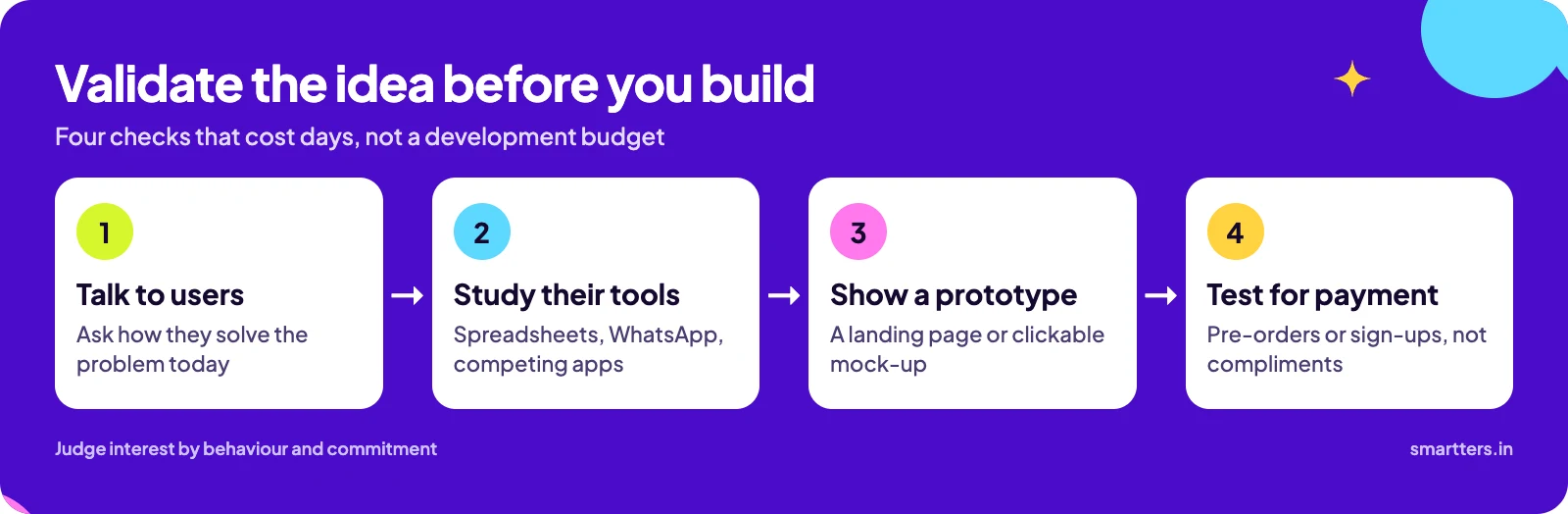
Before investing in development, speak with potential users, study the tools they already use and test whether they would pay for a better solution. A clickable prototype is often enough for that test, which is where UI/UX design for apps pays off before any code is written.
A good idea is a starting point. The real opportunity comes from turning it into something people depend on.
Frequently Asked Questions
What are the best mobile app ideas for startups in 2027?
Some promising app ideas include AI document assistants, freelancer management tools, local service marketplaces, small business inventory apps, appointment management platforms and niche learning applications. The best choice depends on the audience, market demand and how effectively the product solves a specific problem.
What mobile apps can startups build with a small budget?
Startups can begin with focused apps such as subscription managers, freelancer tools, appointment booking apps, study planners or inventory tracking apps. Keeping the first version limited to one core workflow, the approach we take in MVP development, can reduce development time and cost.
Are AI-powered apps still worth building in 2027?
AI-powered apps can be worth building when AI solves a meaningful part of the user's problem. Document analysis, content repurposing, workflow automation and specialised assistants are examples where AI can provide practical value. Adding AI without a clear purpose doesn't automatically make an app useful. If AI is central to your idea, see how we approach AI app development.
How do I validate a mobile app idea before developing it?
Talk to potential users, identify how they currently solve the problem, research competing products, create a landing page or prototype and test whether people are willing to pay. Validation should focus on actual behaviour and commitment rather than compliments.
How much does it cost to develop a startup mobile app?
The cost depends on the features, platform, design requirements, integrations, backend complexity and development team. A focused MVP can be significantly less expensive than a full-featured product, which is why defining the initial scope is important before development begins. For AI products, our guide to AI app development cost in India breaks down typical budgets.
Have an app idea worth testing?
At Smartters, we help founders with startup product development, from shaping the first version to full mobile app development for iOS and Android.
Tell us about your idea and we'll help you work out what to build first.


